
Madison County Busted Mugshots Explained
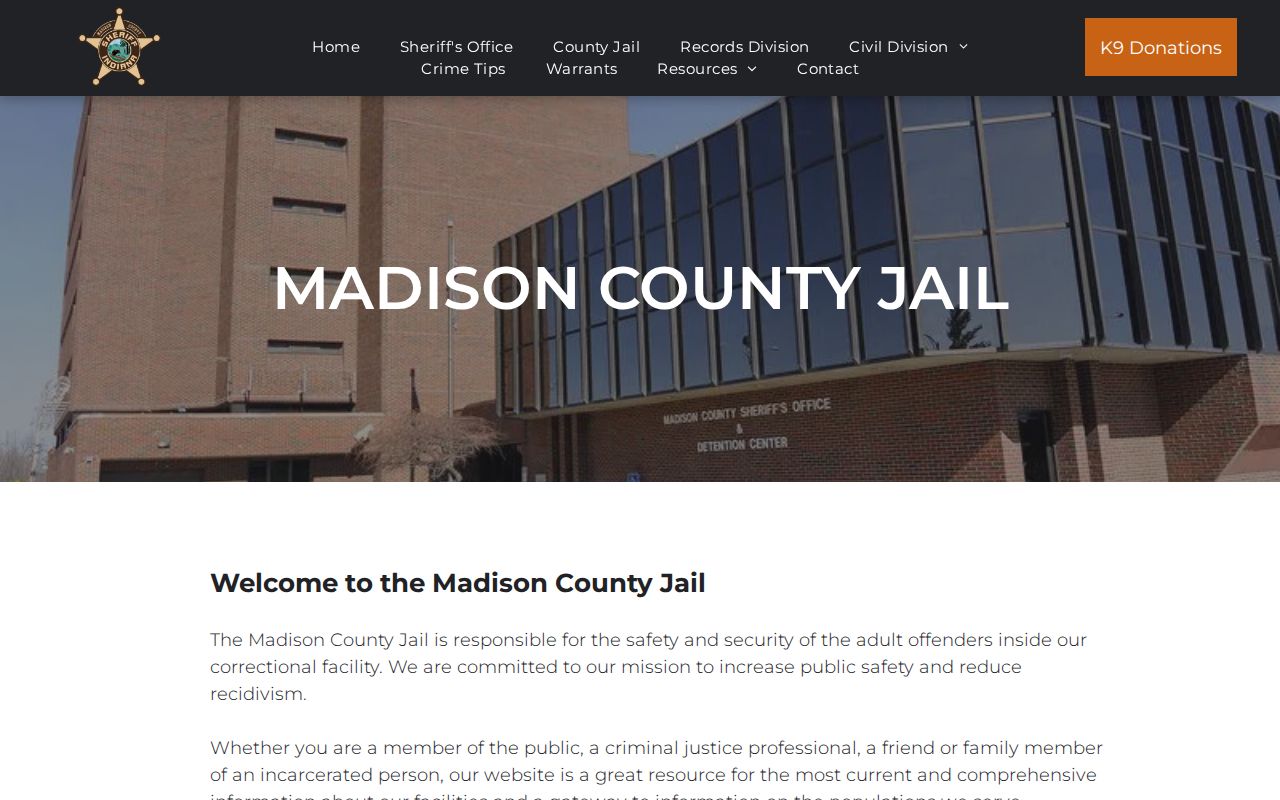
A mugshot is just an ID photo taken at booking. The Madison County Sheriff's Department runs the adult jail. Its jail page links out to a Tyler Technologies inmate inquiry. Local police may make the arrest, but the jail does the paperwork that counts. It assigns the booking number, opens the record, sets the custody fields, and takes the photo. The portal keeps a person and a booking separate. One subject number can carry several booking events over time.
The paper trail runs from the arresting agency to the Madison County Jail. In some parts of the official system it appears as the Madison County Detention Center. Intake can log identity details, where the booking started, charges, bond, court information, and custody status. Other records cover different stages. An Anderson Police call log sits earlier in the chain, since a logged call may never lead to an arrest at all. A court docket sits later. It shows what prosecutors filed, changed, dismissed, or resolved. The official sheriff jail page confirms the handoff to the inmate inquiry.
Go to the government source first. Skip the search result or private repost. A booking photo is just that: a photo from one moment in custody. It is not a current portrait or a full history.
What a Booking Record Shows
The live inquiry offers more than a gallery of faces. Results and detail pages can include the fields below. Some may sit blank. An empty release date or missing image means only that the field was not filled.
| Field | Meaning and limit |
|---|---|
| Name, aliases, subject number | The jail identity record; a subject number differs from a booking number. |
| Booking number and date | One intake event. Use both to separate older or multiple bookings. |
| Photo and demographics | An intake image when available, plus birth date, race, gender, height, and weight fields. |
| In Custody and facility | The recorded custody marker and location, which may include another facility or “Out to Other Department.” |
| Booking origin and agency | The source connected to processing, useful for separating city, sheriff, and state-police events. |
| Charges and offense details | Charges recorded at intake, not final findings. |
| Bond or bail | Recorded type and amount, subject to later court orders. |
| Court, date, room, docket | A bridge to the public case; completeness varies. |
| Release, disposition, sentence | Administrative fields when populated; confirm outcomes in court. |
Booking entries can hold a few different items. A warrant, a charge, or a booking photograph may each appear. None of that is unusual. These pieces simply make up the record. Here is what they look like on a Madison County roster.
Record Terms in Context
Booking is the jail’s intake event and creates the booking number, administrative record, and any intake image. Arraignment or initial hearing is a court stage at which the accusation and procedural rights are addressed; it is not a guilty finding. Bond is a court-controlled release condition or recorded amount and can change after intake. Disposition is the later court result, such as dismissal, plea, judgment, or another resolution. Expungement is legal relief governed by IC 35-38-9 and depends on statutory eligibility and an order. These terms describe different steps. A roster entry should never be used as a substitute for the court’s disposition.
Requesting Busted Booking Records
Older bookings and photos may not appear online at all. When that happens, contact the Sheriff's Records Division. The office is open Monday through Friday, 8 a.m. to 4 p.m. Visitors should arrive by 3:30. No published sheriff fee or turnaround time exists for booking photos, so ask about cost and delivery before you commit.
When the online interface leaves you stuck, the records division is the fallback. A solid request under IC 5-14-3 names an existing record with enough detail for the custodian to find it.
- Give the full name as recorded, approximate booking date, and known subject, booking, report, or case number.
- Identify the originating agency and request the booking or intake record and booking photograph as separate items.
- Ask for electronic delivery, an advance fee estimate, and reasonably segregable material if part is withheld.
- If denied, request the statutory basis. If destroyed or transferred, ask for the retention series, destruction authority, or receiving custodian.
Madison County Sheriff’s Records Division
720 Central Avenue
Anderson, IN 46016
Records: 765-646-9290
Jail: 765-646-9285
Dispatch: 765-642-0221
sheriff_recordsdivision@madisoncounty.in.gov
Keep the request neutral. Skip identity documents you don't need. A focused ask helps the office locate the right record without creating anything new. If the portal shows several bookings for one person, cite the exact booking number and date. Ask whether the photo sits in the custody file or a separate approved record series, since the online display doesn't always define what the department keeps.
Indiana Mugshot Law and Removal
Indiana's Access to Public Records Act, IC 5-14-3, controls official access. The Public Access Counselor's warrant and mugshot guidance makes clear that photos are public records and do not become exempt just because an agency labels them investigatory. Still, IC 5-14-3-4(b)(1) gives agencies discretion over investigatory records, so access can hinge on consistent policy, specific facts, and other exemptions. Nothing is automatic.
Juvenile privacy works differently. Juvenile court records and most delinquency records held by law enforcement are generally confidential under IC 31-39, though limited incident and detention information has statutory exceptions. Assume neither that a juvenile image is public nor that every related fact is sealed.
No universal delete button exists, and no Indiana statute targets commercial pay-to-remove mugshot sites. For a factual error, contact the source custodian with the URL, booking number, and the exact problem. For sealing or expungement, use the judiciary's expungement materials, the clerk, and qualified legal help. IC 35-38-9 sets different eligibility and waiting tiers. Relief restricts access within its scope rather than destroying every copy.
Once an order issues, send it to every sheriff, police department, clerk, or custodian involved. Ask when the public interface will update. Then work the private sites. Recently Booked charges no removal, suppression, or modification fee. It accepts documented dismissals, sealing, inaccuracies, juvenile matters, wrong-person entries, and duplicates. Mugshots.com offers free record maintenance for qualifying orders and corrections. No verified free policy exists for Busted Newspaper, Arrests.org, Mugshots Zone, or Madison County Public Jail Records. After a source changes, request a search engine cache refresh. Skip paid removal services.
How to Find Madison County Busted Mugshots
- Start at the sheriff-linked inmate inquiry. Decide whether the question concerns present custody or an older booking.
- Search by name, exact subject or booking number, and a bounded date range. Match the correct event.
- Check booking origin, agency, date, custody marker, facility, and photograph. Confirm urgent location questions with the jail.
- For missing material, send a focused APRA request to the sheriff or police department that created it.
- Use MyCase for disposition, IDOC for state correctional custody, SAVIN/VINE for notifications, and federal locators for separate systems.
The official inmate inquiry displays the controls used for this process.
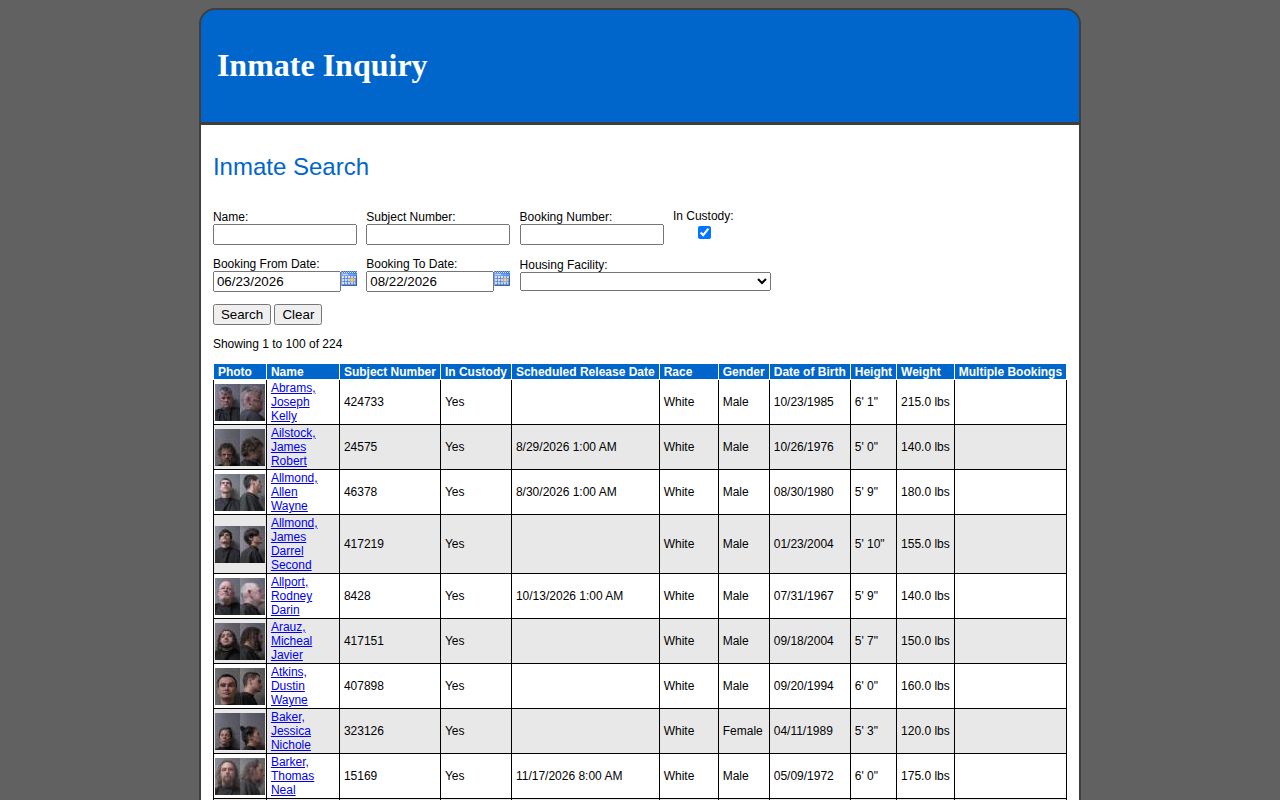
Clear the custody filter and add dates, and the tool becomes both a live roster and a search of retained bookings. That matters, since no separate reliable feed of recent bookings exists for the county.
Where Busted Mugshots Appear
Official sources answer different questions and come first. Private sources are secondary discovery tools that may be incomplete, duplicated, delayed, wrong, or stale.
| Channel | Photo? | Official? | Use |
|---|---|---|---|
| County inquiry | When available | Yes | Current and retained bookings, dates, origin, charges, bond, custody. |
| Records request | Request separately | Yes | Missing online images and custodian-verified copies. |
| IDOC locator | Not guaranteed | Yes | State correctional custody, not every arrest. |
| MyCase | No mugshot function | Yes | Case progression and disposition. |
| Busted Newspaper | Often | No | County reposts; verify officially. |
| Recently Booked | Often | No | Claims 30 days and multiple updates daily. |
| Mugshots.com | Often | No | Archive, not reliable live custody. |
| Arrests.org | Often | No | Direct access was restricted during research. |
| Mugshots Zone | Often | No | Apparently uneven or batched coverage. |
| Public Jail Records | Varies | No | Warns transfers or returns may appear without a fresh arrest. |
No local paper runs a verified, systematic mugshot gallery. For reporting that follows a case through the courts, Arrest News keeps journalism and prosecutor outcomes separate from raw booking evidence.
Busted and Booked: Full Roster Search
Leave “In Custody” selected for the current roster. Clear it to pull released or older bookings. Then narrow the dates. Facility filters cover the Madison County Detention Center, the Madison County Correctional Complex, DOC, neighboring jails, and “Out to Other Department.” That last option matters. The database holding a record does not always tell you where the person physically is right now.
| Search field | Purpose |
|---|---|
| Name | Start broadly, then verify identifiers. |
| Subject Number | Find the jail identity record. |
| Booking Number | Target one intake. |
| In Custody | Checked for current; cleared for retained records. |
| Booking From / To | Set an exact day or multi-day range. |
| Housing Facility | Narrow when the recorded facility is known. |
Open any result and check the booking number, date, origin, agency, and identifiers against what you already know. The grid shows photo thumbnails. Detail pages show booking images where they exist. The sheriff does not promise a photo on every record. Updates land on no fixed schedule. Nothing stays online for a guaranteed span. Think of the system as operational, not instant.
There is no public Madison County sheriff mobile app. The generic social icons floating around are not verified. For custody notifications, Indiana SAVIN/VINE is the official alternative. But it is not a photo source or a court database.
Busted Recently: No Dedicated Feed
No dedicated feed exists. The sheriff posts no 24-hour, 48-hour, 72-hour, or weekly list of new bookings. The blotter is access restricted. The county daily-log link from Anderson goes nowhere usable. So there is no honest way to promise a same-day stream, a weekend surge list, a refresh interval, or a feed archive.
Practical windows: set Booking From and Booking To to a single date for one day of results. Widen the bounds for 48 hours, 72 hours, or a full week. Pick the custody filter that matches your question. Remember these are database queries, not curated feeds. Processing delays or data entry can slow when a booking appears.
Anderson’s News Media Daily Log folder is the city daily channel identified.
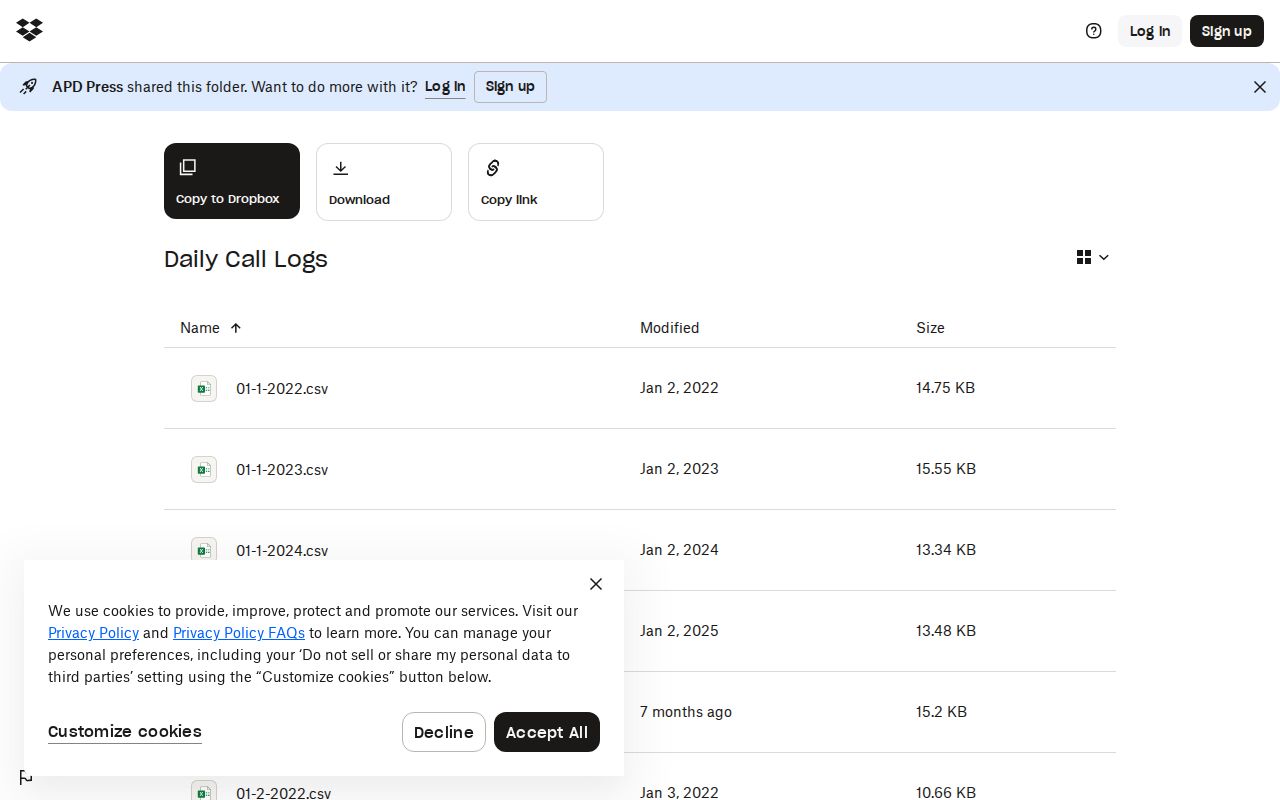
The daily log holds call and incident entries, not booking photos. IC 5-14-3-5 requires that covered log information be prepared within 24 hours of reported activity. That says nothing about a fixed web posting schedule, though. A call can end with no arrest at all. A booking by another agency may never show up as an APD entry. For older material, clear the roster custody filter or file a records request.
State, Federal, and Custody Alerts
The Indiana Department of Correction locator tracks people in state correctional custody. It does not cover every Madison County arrest. Many arrests never create an IDOC record at all. A case can end without filing, in dismissal, on probation, or in local custody, so the person never enters the state system. Search by name or DOC number. Keep a DOC number separate from a county identifier. No official source promises a photo with every result. Indiana SAVIN, paired with VINE, spans all 92 counties and sends notifications for placement, release, transfer, and other custody changes.
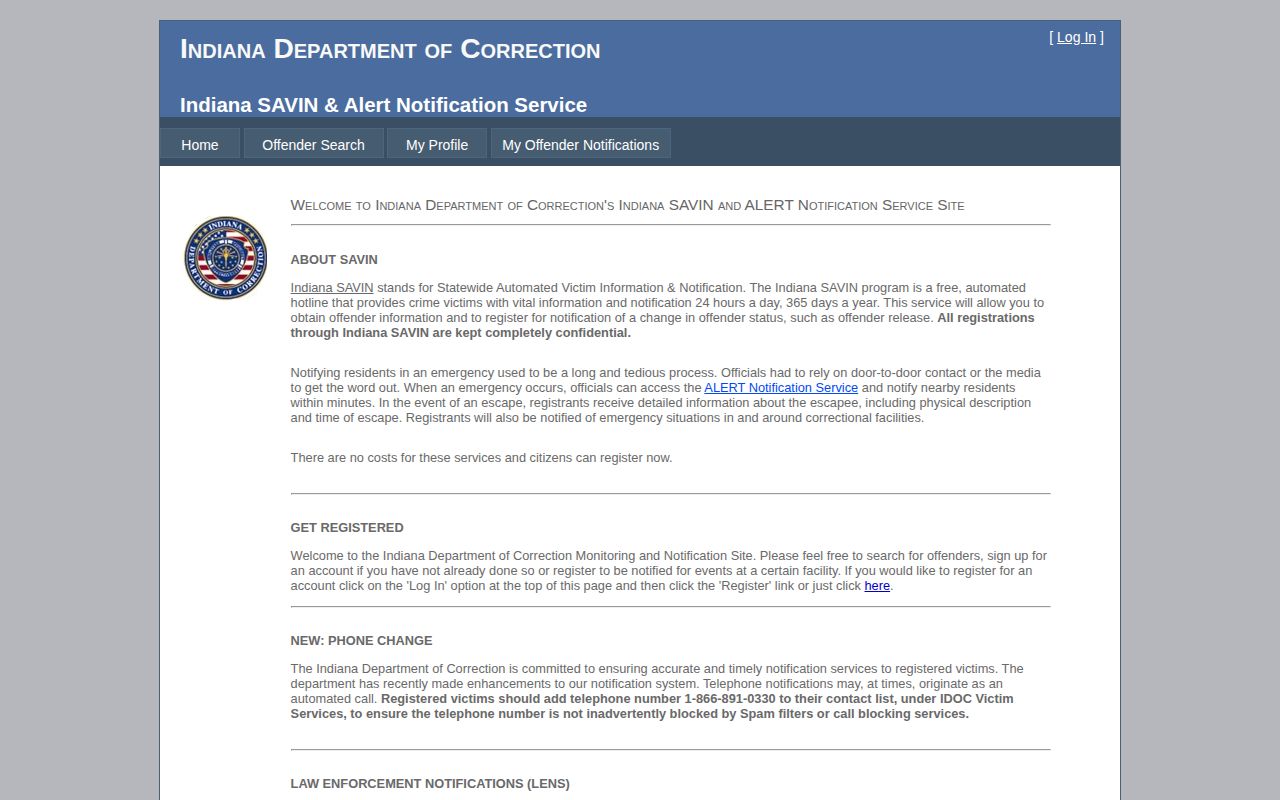
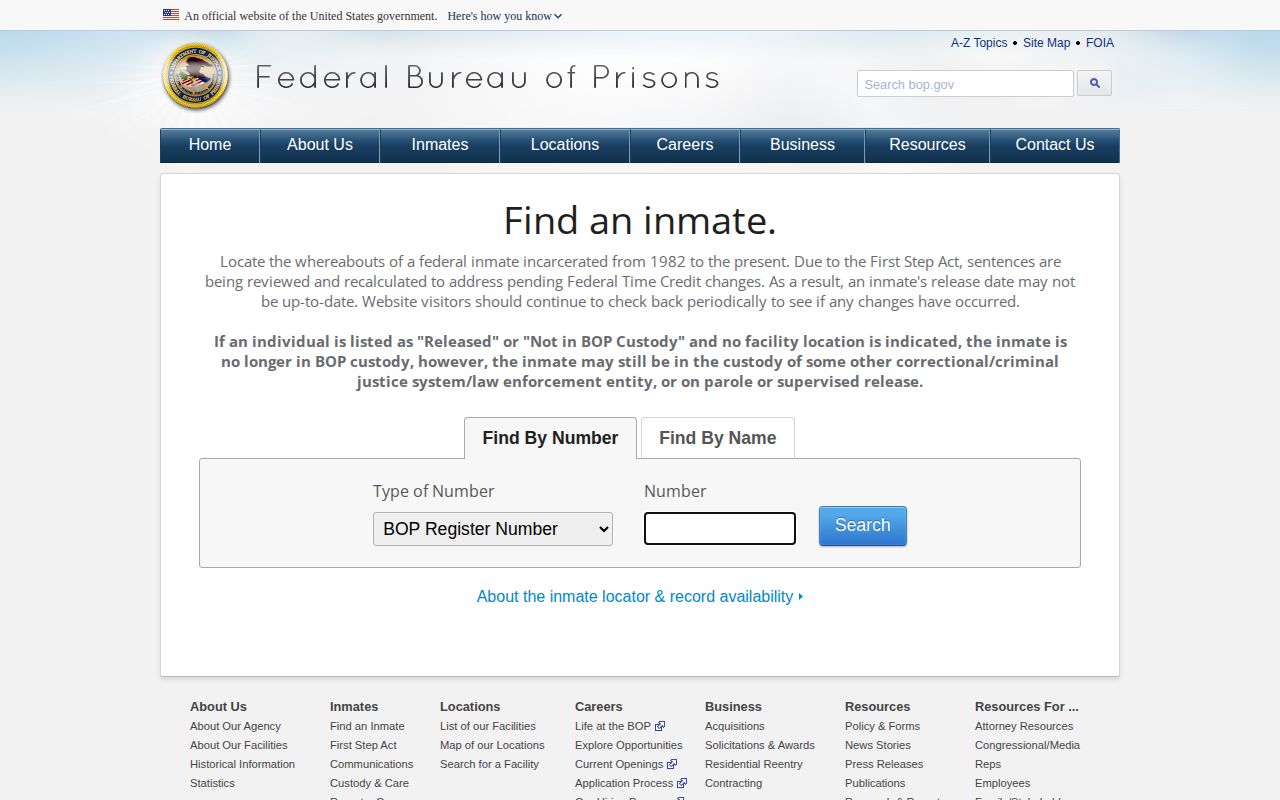
SAVIN beats refreshing a static page for custody tracking. Still, it is not a mugshot database. It is not a court record either. A release alert can mean bond, a transfer, completed sentencing, or another operational change. For federal custody, the Federal Bureau of Prisons locator works, though it has no portrait field.
The ICE detainee locator handles civil immigration detention and, again, shows no photos. U.S. Marshals operations can involve pretrial transport, but the agency offers no general locator. And a local hold label by itself never explains another agency’s legal basis for holding someone.
Booked vs Released: Record Locations
| Status | Best source | Limit |
|---|---|---|
| Just booked or held | County inquiry, In Custody selected | Confirm urgent location by phone. |
| Released or older booking | Clear custody filter, add dates, then request | No fixed online persistence promised. |
| State prison | IDOC locator | Not every arrest; photo not guaranteed. |
| Federal or immigration custody | BOP or ICE | Separate systems and legal categories. |
| Case outcome | MyCase and clerk | Not a custody roster. |
| Custody alerts | SAVIN/VINE | Does not establish disposition. |
After the Bust: Court Outcomes
The roster often includes a court or docket field. Carry that straight into MyCase. There, a chronological summary can show hearings, bond orders, filings, amended charges, dismissals, pleas, trial, judgment, and sentence where public. Check the county, court, dates, and identifiers first. A same-name case in another place proves nothing. When a document is not linked online, follow the judiciary's court-record request guidance or call the clerk. Access depends on the document and case type.
How Long Busted Records Survive
Retention runs on record series, not web visibility, under the IARA County/Local Public Safety schedule. PSA 17-39 governs adult inmate custody files. It permits destruction ten years after incarceration ends. Files for those under 18 fall under PSA 17-40. That rule uses the later of ten years after incarceration or seven years after age 18. Arrestee fingerprints under PSA 17-35 are permanent. Police case files and expungement orders follow separate rules.
PSA 17-39 never names "mugshot" as its own category. Ask how the booking image is actually filed. The custody rule is not a blanket ten-year photo promise, and lawful destruction does not mean archival transfer. Older state-prison material sits with the Indiana State Archives DOC holdings.
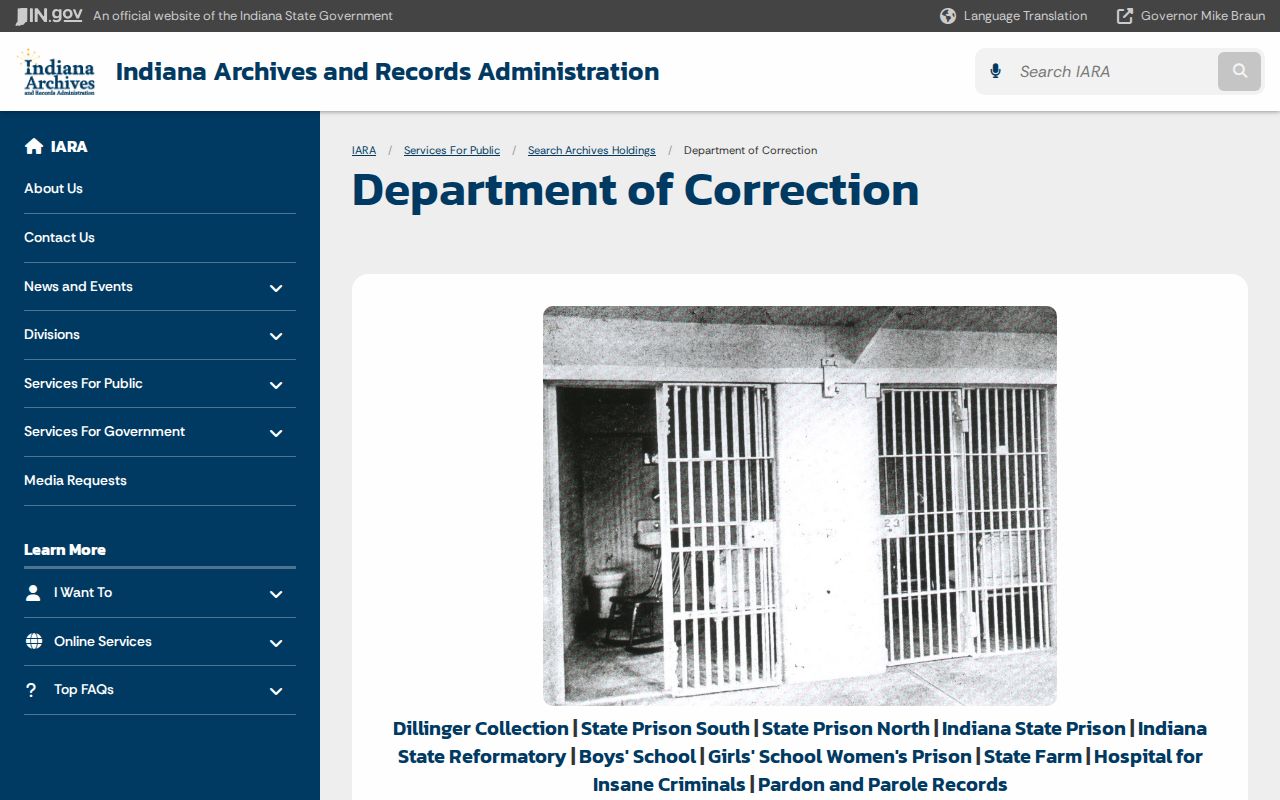
Where do old Madison County busted records actually live? The State Archives holds historic material from the Indiana State Prison and the Women's Prison, but nothing from the county jail. No county booking photos pass to the Archives automatically.
That split shapes any search. Start with the Sheriff's Records Division for a released county booking, since its retention schedule governs what survives. A person committed to IDOC falls under the state correctional channel instead. For genuinely old state-prison files, the Archives wants a full name, rough dates, the institution, and any identifying number you can supply. Keep one point in mind: destruction under a county schedule never implies transfer. If staff come up empty, ask which series applied and whether another custodian took the file.
A blank online search proves little on its own. The entry may have aged out of the public interface, been sealed, been expunged, filed under a different identifier, or lawfully destroyed. Guessing among those gets you nowhere. A written reply from the responsible custodian is the record worth having.
Busted Mugshots by Madison County City
Each city page names the police agency that creates local activity records and shows how to confirm a county booking.
- Anderson Busted Mugshots: APD offers a call log and records form; the sheriff holds county bookings.
- Elwood Busted Mugshots: verify jurisdiction because Elwood crosses a county boundary; no city blotter was found.
- Pendleton Busted Mugshots: use the named records contact and fee ordinance, then verify booking origin.
These three are the county's largest incorporated places in the 2025 county profile. A private site's city label proves nothing about which agency, jail, or court handled the event.
Public Record Search
Sponsored Results
Get County Booking Records In Person
Its enforcement mix combines the Anderson Police Department
1040 Main StreetAnderson, IN 46016
765-648-6700